ambassador animals
Meet the STARS of our education programs! While most of our animals are visible to the public within the Aquarium, we have another collection of education animal ambassadors that can only be seen during special education programs and shows. Join us for up-close experiences in our exhibit and other locations on property to learn about wildlife. Our animal keepers will help you connect with these amazing animals through incredible animal interactions.
scaly reptiles & invertebrates
BEARDED DRAGON
Pogona vitticeps
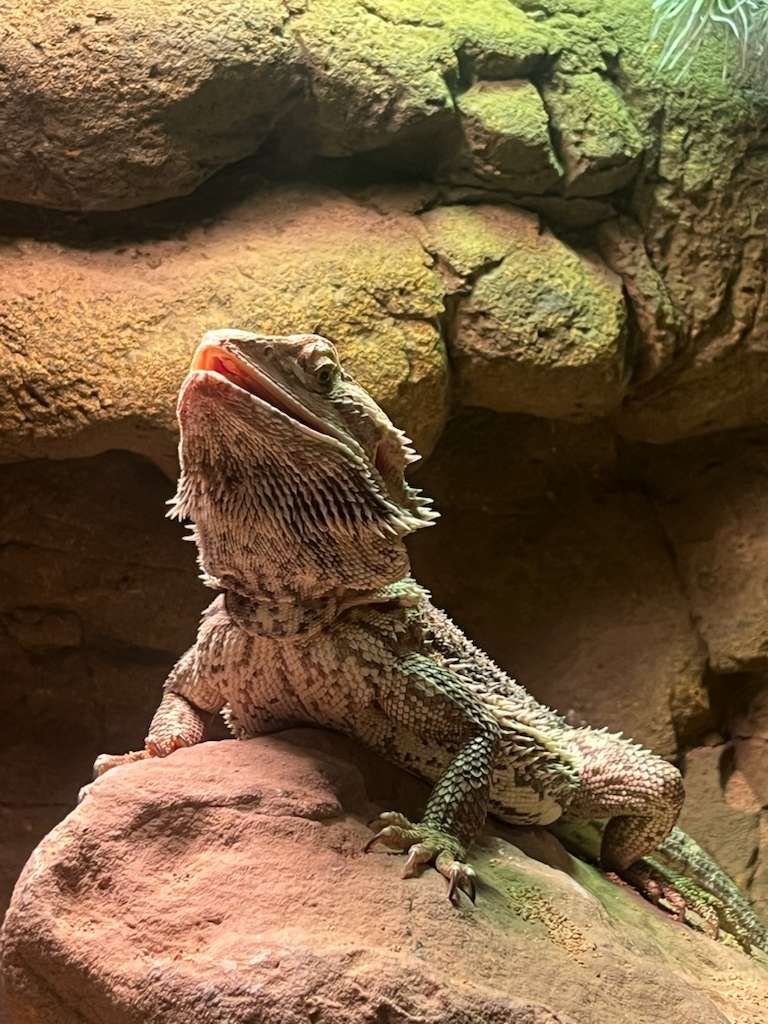
This species is named for the spiny "beard" on its throat. Its body is covered in protective scales, and it has a broad triangular head. As a defense mechanism, they open their mouth and puff out their beard, which instantly turns jet‑black color to appear more threatening to potential predators.
Bearded dragons can grow up to 20 inches in length, including their tail, and can typically live between 10-15 years.
DOLLY
Dolly, our flamboyant Bearded Dragon, is a natural showstopper. She communicates with confident head bobs and expressive body language that make her presence known. She loves basking on her favorite rock, soaking up the warmth, and when she’s out for her walks through Stingray Reef, she proudly surveys her surroundings like the queen of the exhibit — keeping all the other species in line with her bold personality.
RED-FOOTED TORTOISE
Chelonoidis carbonaria
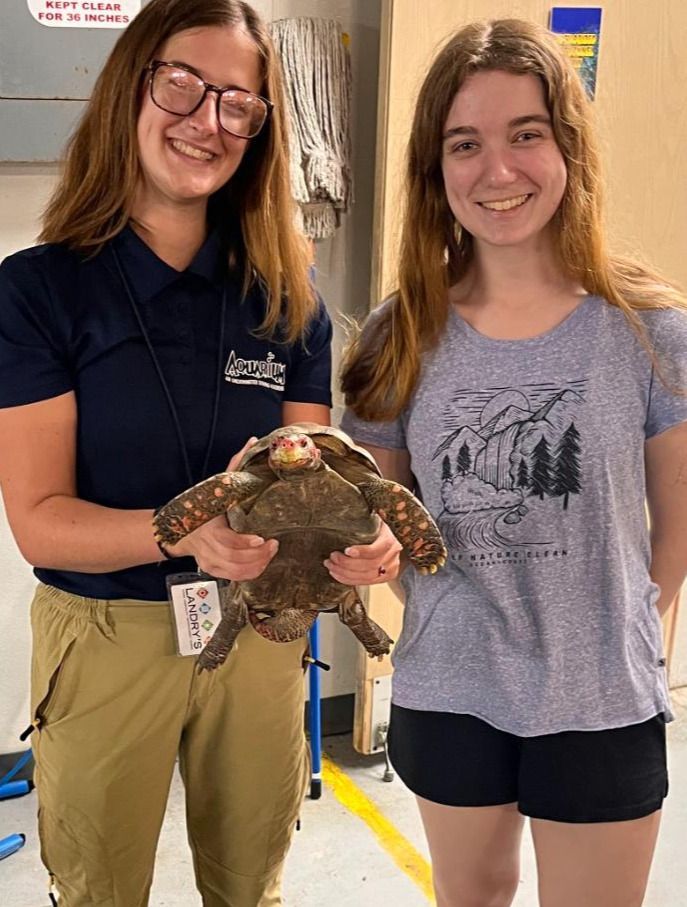
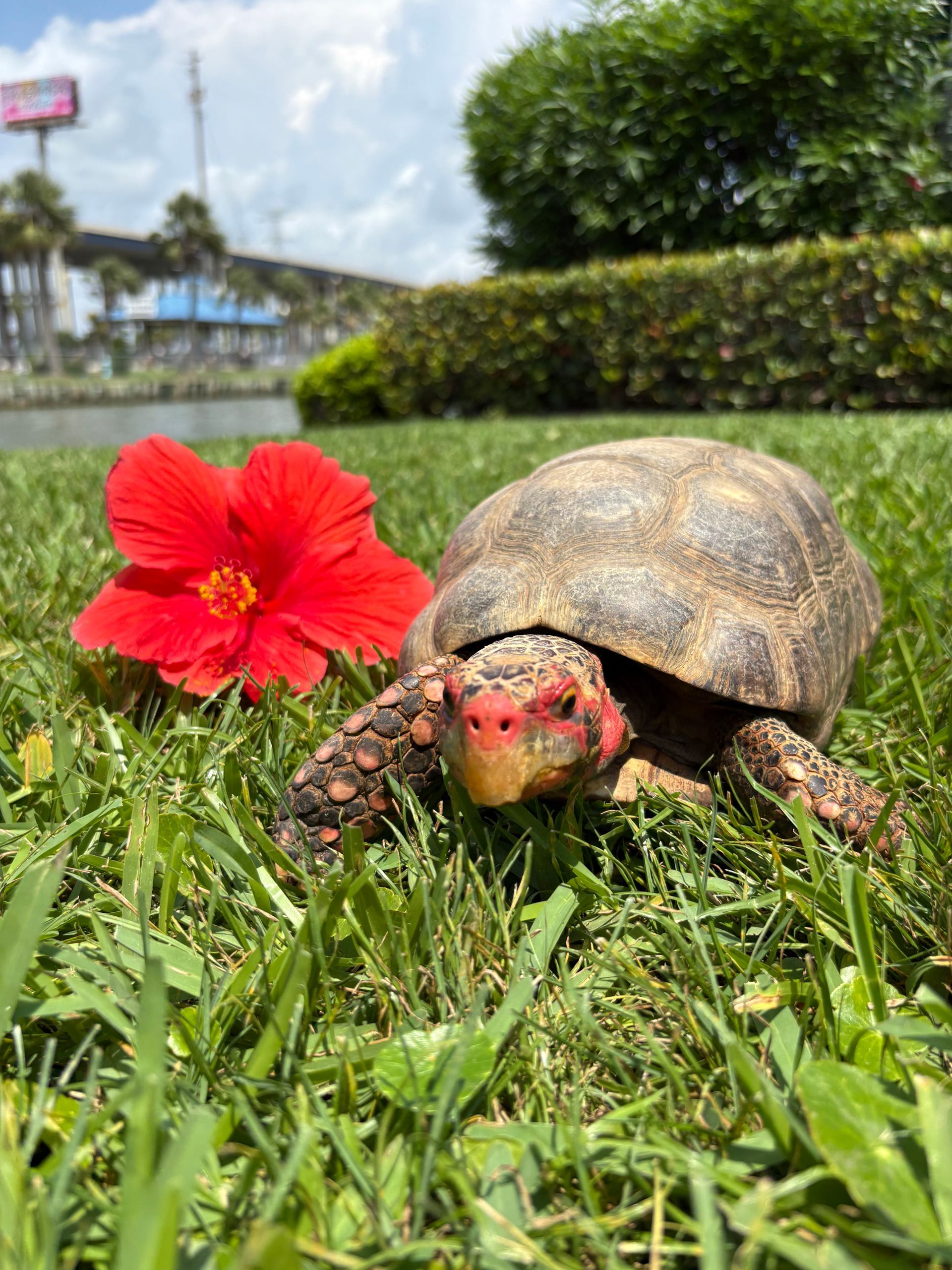
These tortoises have dark brown or black shells with lighter-colored spots and distinctive red or orange scales on their legs, which give them their name. While red footed tortoises don’t have the sharpest eyesight, they are excellent at detecting bright colors, a helpful adaptation for spotting fallen fruits and fresh vegetation on the dim forest floor of their native habitat. In the wild, this talent plays an important role. As they roam and feed, red footed tortoises help disperse seeds through the ecosystem, making them quiet but essential forest gardeners.
They reach up to 16 inches in length and live up to 50+ years.
TACO
Taco, loves to explore in the sun to warm up and is extremely curious. Taco stays active in his own unhurried way. He enjoys long, slow strolls on the Kemah Boardwalk and investigating his colorful toy balls. He loves to spend his time foraging for tasty treats, with red bell peppers ranking high among his favorites.
leopard gecko
Eublepharis macularius
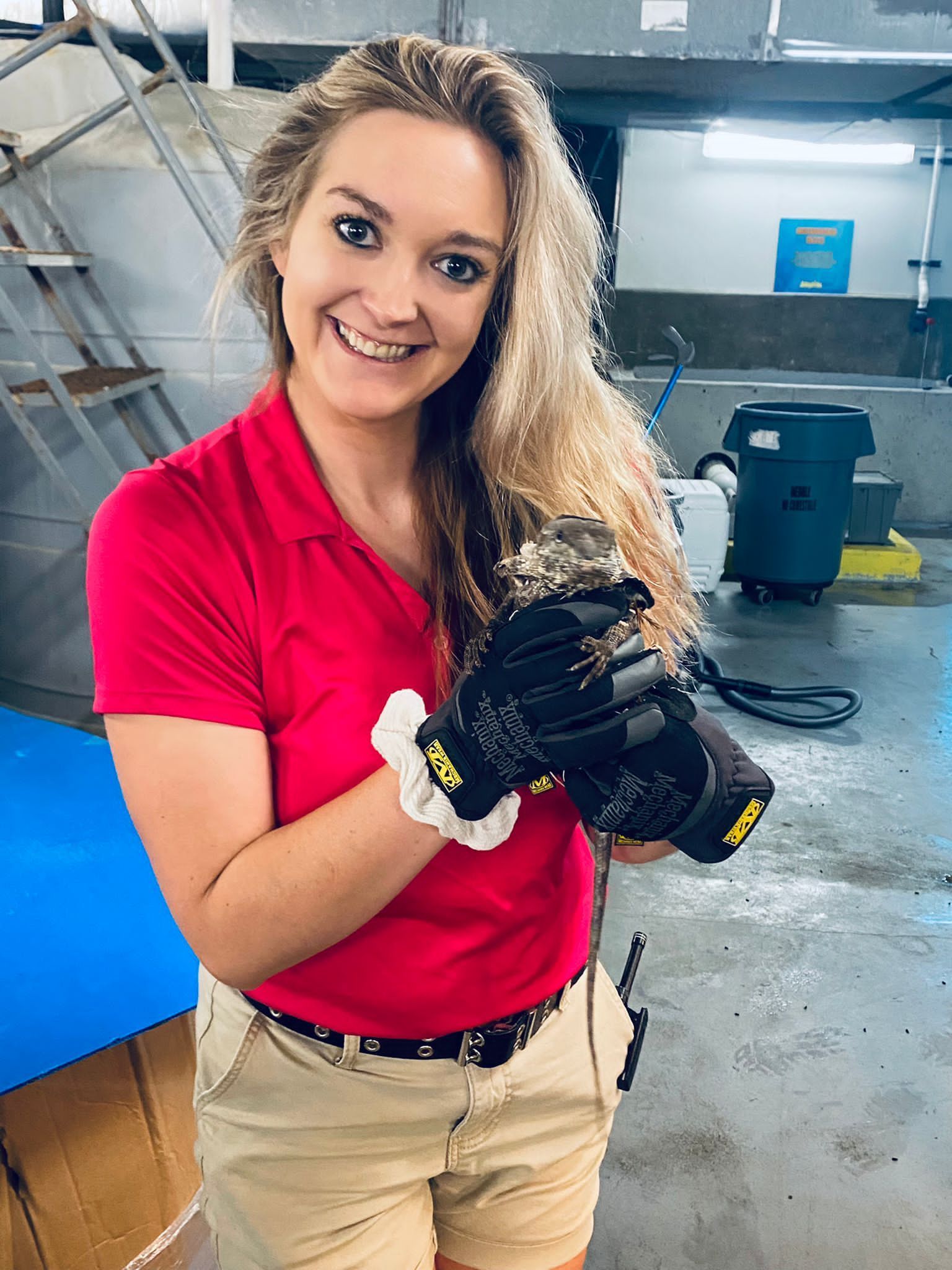
Leopard geckos are pale yellow with dark brown spots. Unlike many other gecko species, they have eyelids and lack sticky toe pads, so they cannot climb smooth surfaces. While they are a hearty species, if threatened, it can drop its tail. The tail will move for a few minutes to confuse predators allowing them to make their escape. They can regenerate their tails. When it regrows it never comes back quite the same.
They reach up to 10 inches in length and live up to 20 years.
RANGO
Rango, our sweet leopard gecko, is a quiet little explorer who enjoys life at her own pace. Her favorite place to be is her cozy, moisture rich peat moss hide — the perfect spot to rest and recharge. When she’s ready to be active, Rango becomes a focused hunter, carefully stalking the live insects in her enclosure before making her move.
KENYAN SAND BOA
Eryx colubrinus
Kenyan sand boas have a short, stout body with a blunt head adapted for burrowing. They tend to burrow away from threats rather than striking and have a specialized body shape that allows them to move through sand with ease, using their blunt heads to push through loose soil. These constrictors spend about 80% of their lives buried in the sand and will drag prey under the sand to suffocate and have dinner.
Females typically grow to 26-32 inches, while males are smaller. They can live up to 20 years.
SPRINKLES
Sprinkles, our sweet little Kenyan Sand Boa, is a true burrowing expert! His favorite enrichment activity includes burrowing in substrate. To keep things stimulating, our biologists switch out his digging materials from soft sand to sphagnum moss and even colorful icing sprinkles. Each new texture encourages Sprinkles to explore, burrow, and show off his natural hide and seek skills.
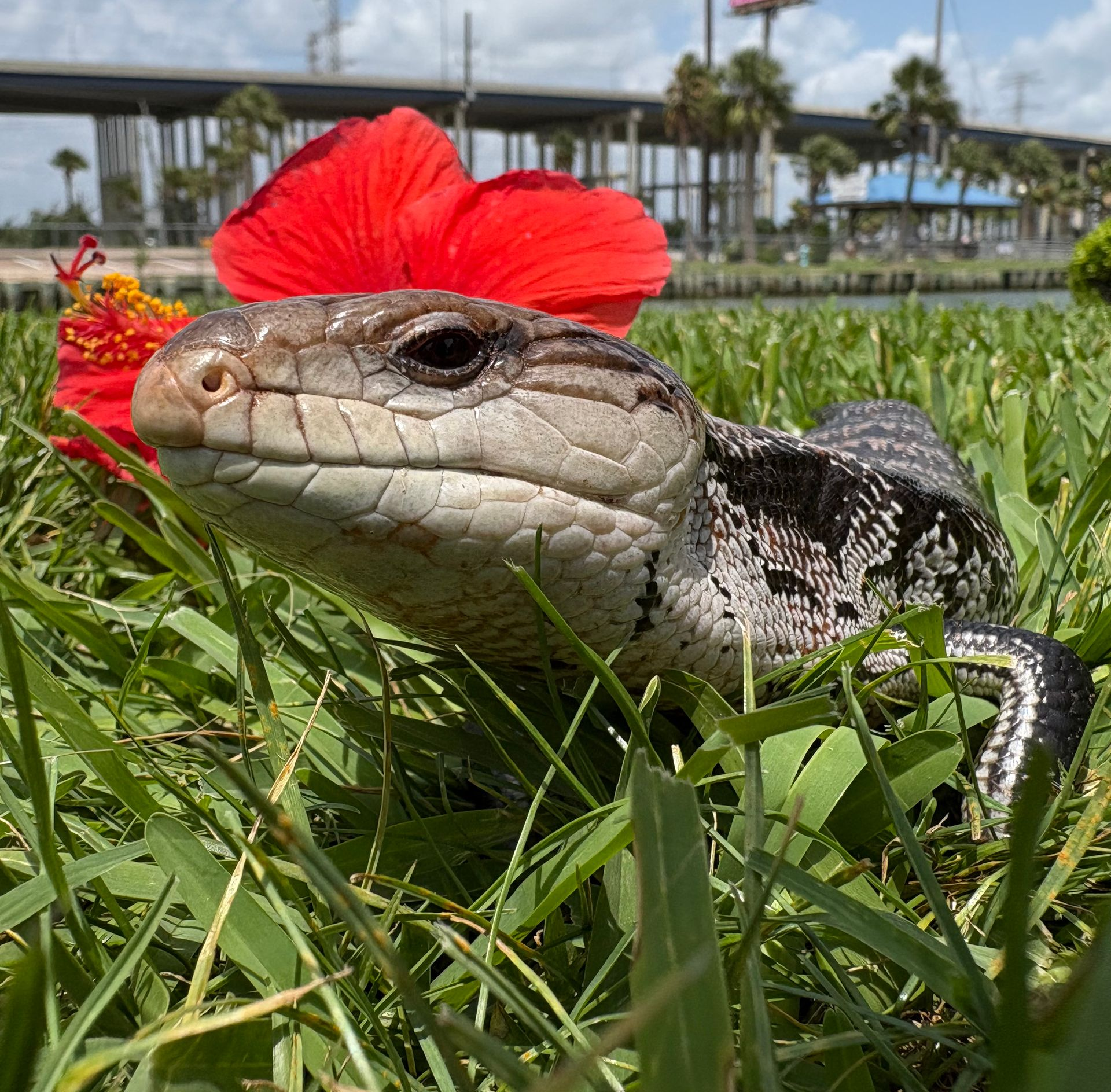
blue tongue skink
Tiliqua scincoides
When threatened, a blue‑tongued skink will gape its mouth, flash its bright blue tongue, and hiss loudly to scare off potential predators. They are remarkable lizards with a tail that acts as a fifth limb, allowing them to grasp and hold onto branches. Like many lizards, blue-tongued skinks can release their tail and have the ability to regrow it.
They are the largest species of skink, reaching up to 24 inches in length, living for 15-20 years.
TUGBOAT
One of Tugboat's favorite enrichment activities is foraging for snacks, using his remarkable blue tongue to "taste" the air and track down food. While that bright tongue can be a dramatic defense in the wild, Tugboat usually reserves his opinions for sleepy mornings — when being woken from a nap earns a brief wiggle of protest before he settles back into his calm, easygoing self. He will do just about anything for a hardboiled egg!
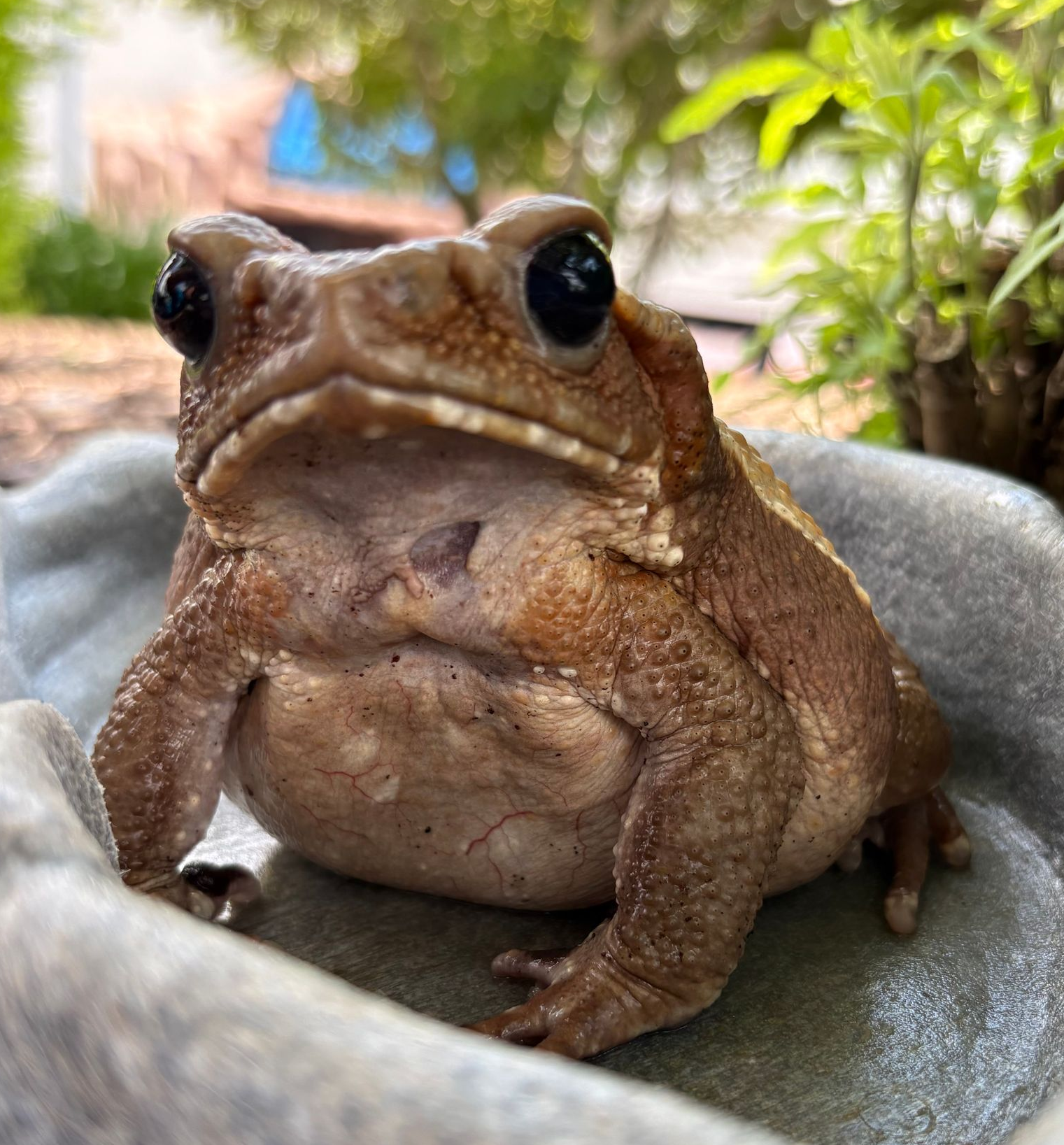
SMOOTH-SIDED TOAD
Bufo guttatus
This is one of the few toad species to have smooth skin. Their smooth appearance is due partly to the fact that the warty-looking toxin glands easily seen in other toads are not as obvious in these toads. Toads crawl rather than hop like frogs do and they do not have teeth, so they don't chew their food, they swallow it whole!
They can grow to be 5–9 inches long and live up to 10 years.
GILLY
Gilly began life in the water as a tiny tadpole, complete with delicate gills for breathing beneath the surface. After undergoing an incredible metamorphosis, he transitioned into the land-dwelling amphibian you see today. Like all amphibians, Gilly can absorb oxygen through his skin, making species like him important indicators of environmental health in the wild. Though he has strong, powerful back legs built for leaping, Gilly prefers a more leisurely lifestyle. He enjoys slowly exploring his habitat and spending long, relaxing soaks in his water bowl. If you listen closely, you might even hear a soft chirp, his way of letting us know he’s content.
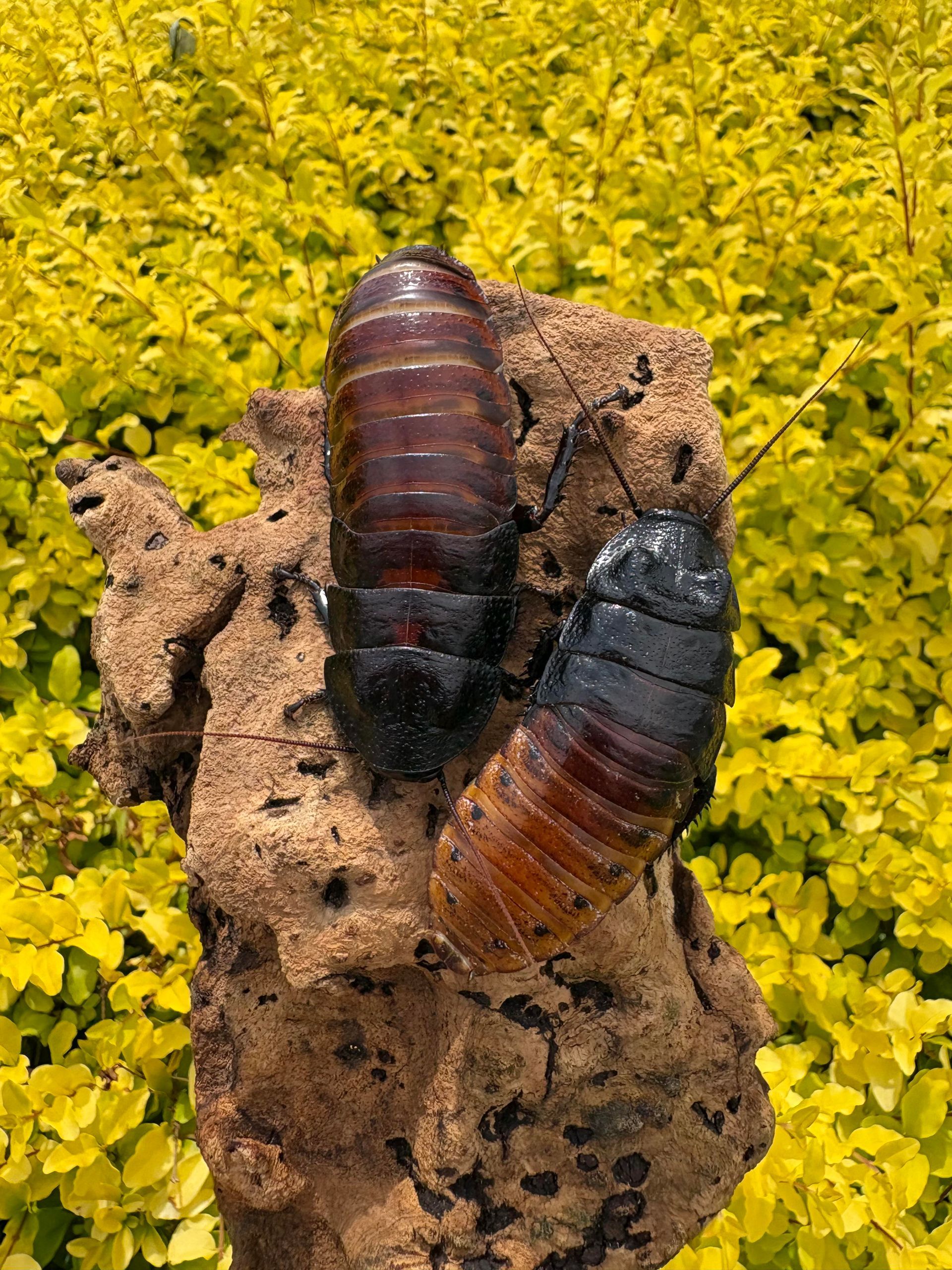
madagascar hissing cockroaches
Gromphadorhina portentosa
These cockroaches have a very a thick exoskeleton. Males sport large horns, which they use in aggressive encounters like the battles between horned or antlered mammals. They have pads and hooks on their feet that allow them to climb smooth surfaces. They do not have wings!
They grow up to 2-4 inches in length and typically live 2-3 years. One of the largest species of cockroach in the world!
HAL & HIS COLONY
They may sound and look intimidating, but they’re all hiss and no sting!
They have small holes called spiracles on their backs used for breathing. If they force air out of the spiracle quickly, it makes the hissing sound. They have different types of hisses to convey different messages. Its alarm hiss, which sounds like a loud snake hiss, is the cockroach's attempt to scare off intruders. Here at the Aquarium, Hal and his colony spend their time exploring, climbing, and demonstrating just how incredible and important insects can be.
UP CLOSE & PERSONAL
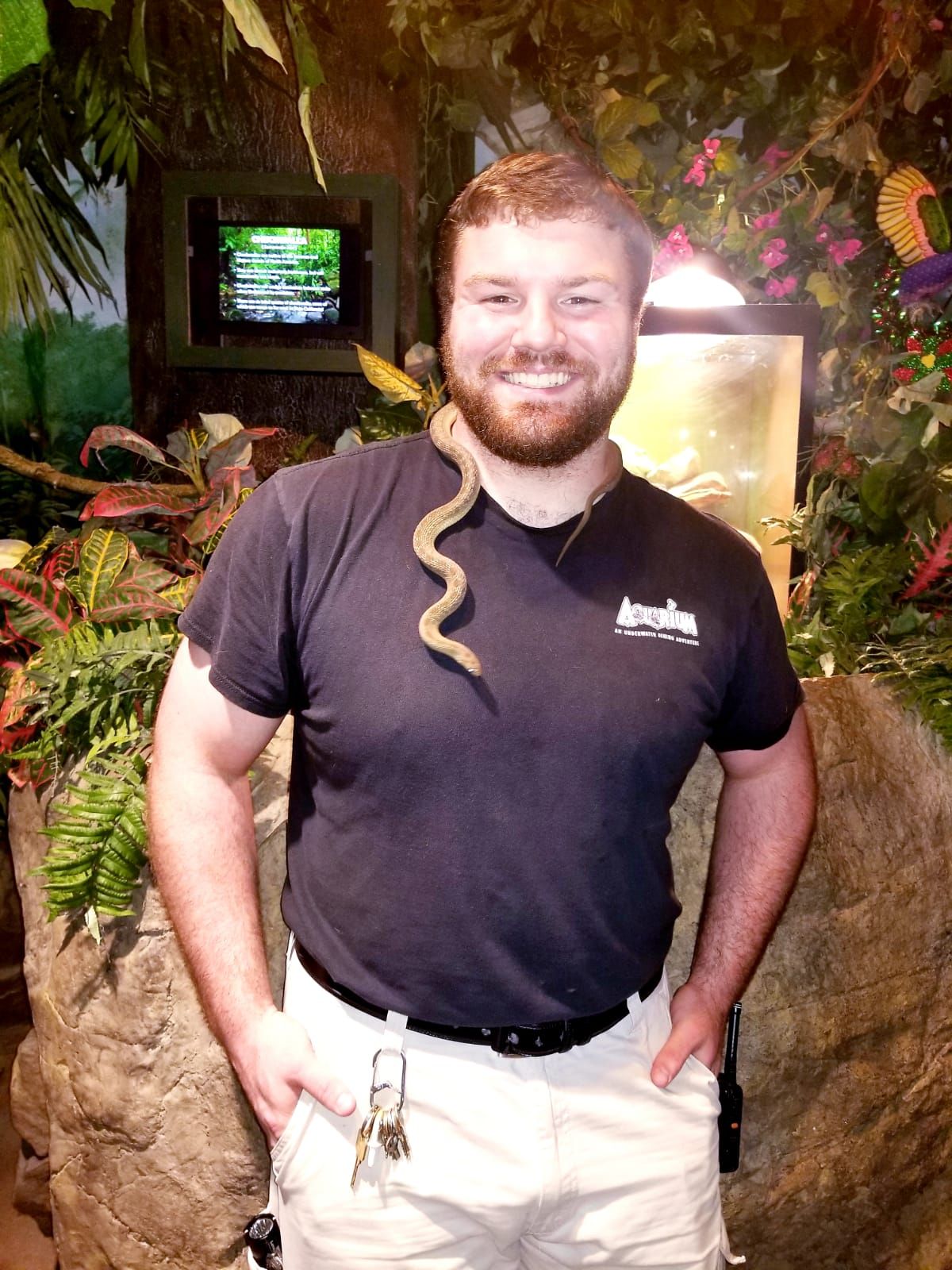
EVENT KEEPER CHATS
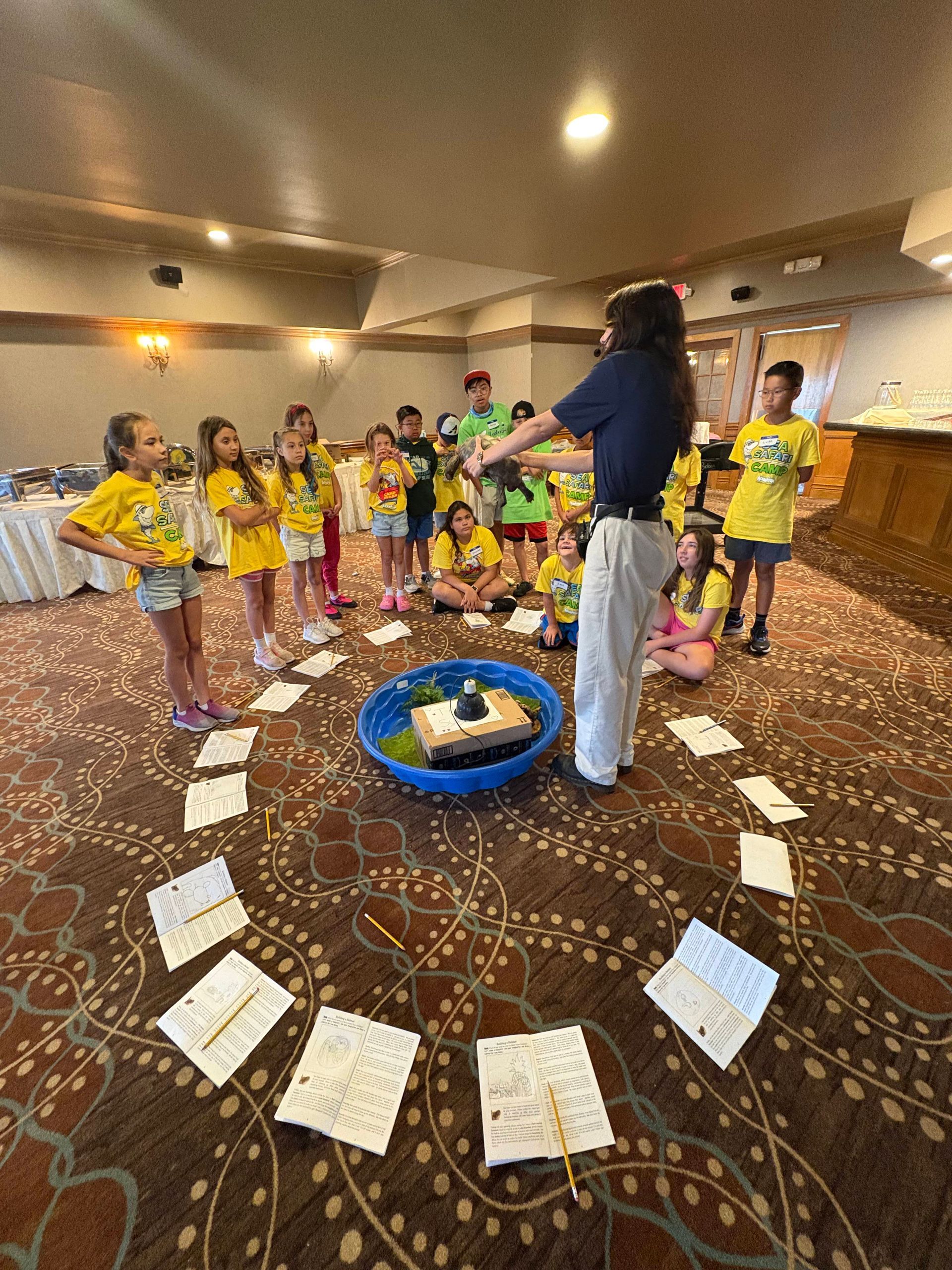
Learn more about our animals when visiting us during one of our Events. The activities take place in our Stingray Reef on specific event days and times. Check out individual Event schedules for the latest.
PRIVATE ANIMAL ENCOUNTERS
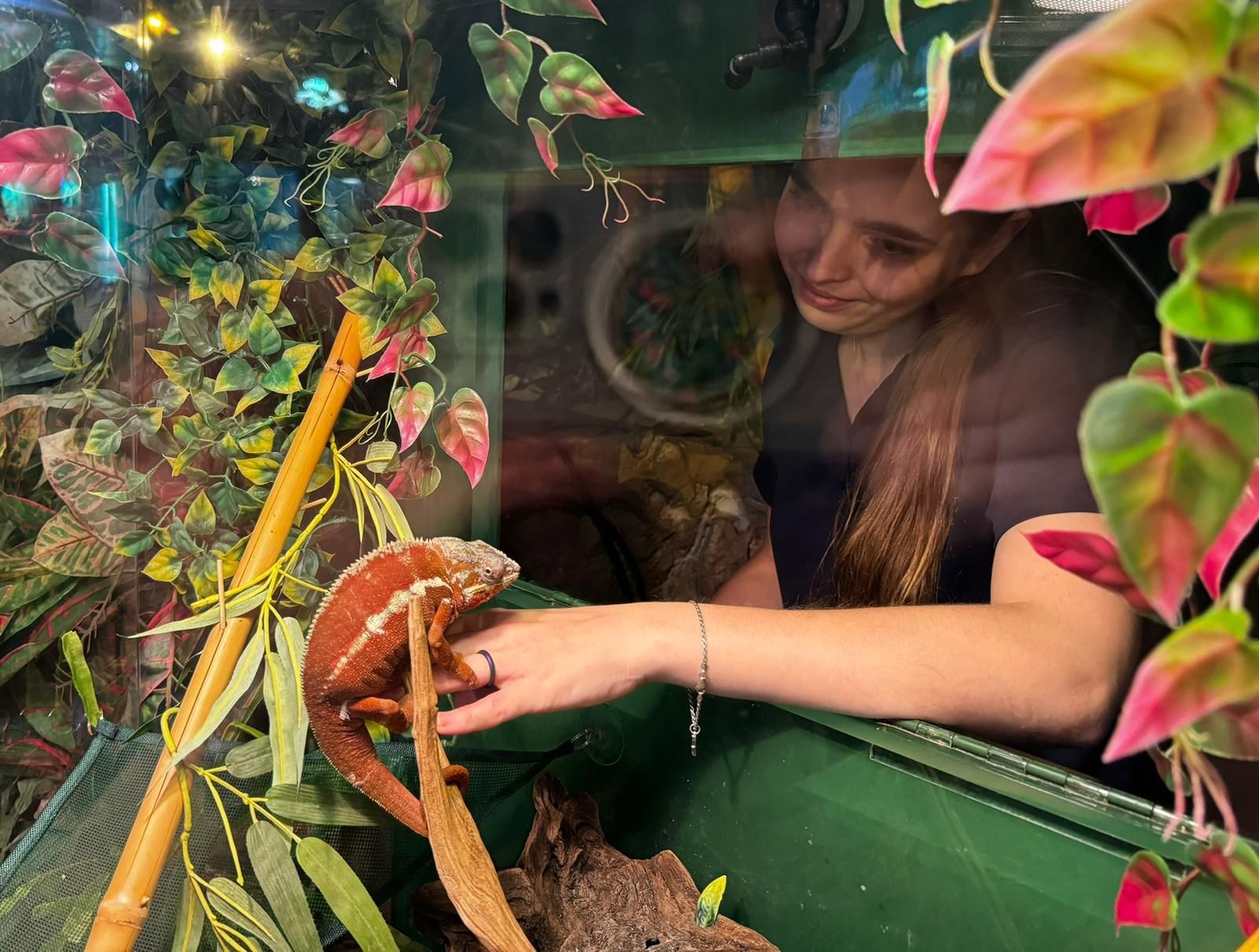
Book an exclusive Meet and Greet with our Ambassador Animals! Sign up today.